Are you or a loved one searching for a trusted sober living program? Give us a call!  310-953-4075
310-953-4075 310-953-4075 Parents play a major role in preventing teen drug use, but most don’t realize how early signs can show up.
If you’re concerned, some common warning signs include:
Early awareness, open communication, and a supportive home environment can make a significant difference in preventing or addressing substance use.
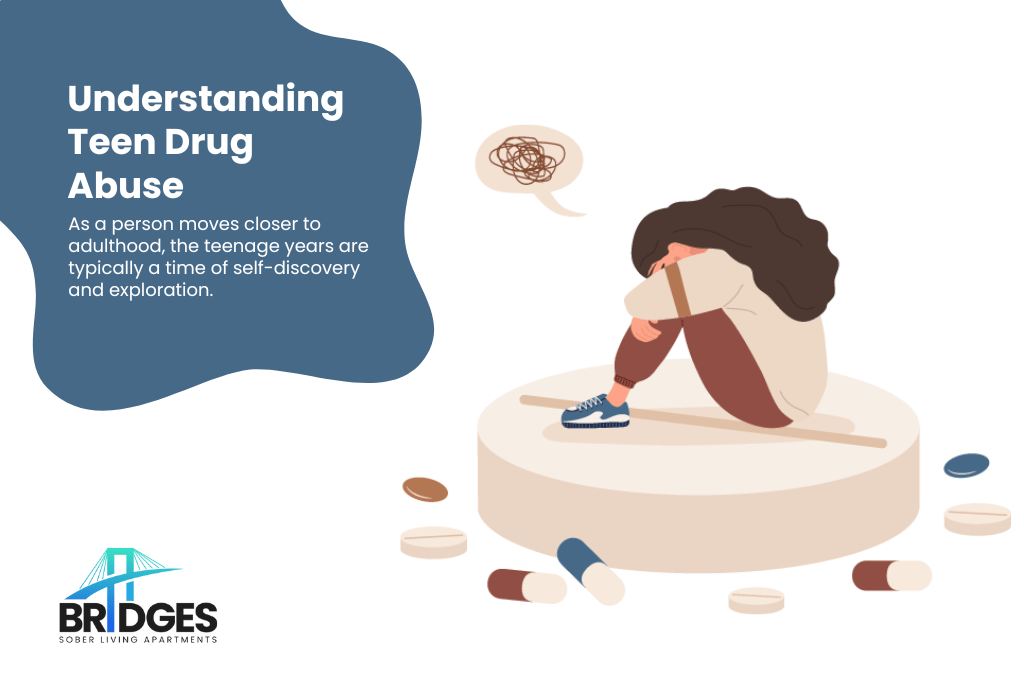
As a person moves closer to adulthood, the teenage years are typically a time of self-discovery and exploration.
While the majority of youth are in good health, some youth are at an increased risk for engaging in behaviors that put their health in danger, such as using high-risk substances.
In many cases, they experiment and see how far they can push their limits without knowing the dangers of substance abuse habits.
In addition, most people who fulfill the diagnostic criteria for drug or alcohol abuse began their misuse at a young age.
According to the Centers for Disease Control and Prevention (CDC), 15% of high school students in the U.S. have admitted to having tried some illegal substances or taken them intravenously at some point in their lives. These drugs include cocaine, heroin, hallucinogens, ecstasy, and methamphetamines.
More than 5,700 youth in 2014 reported using prescription pain medicines without a doctor’s supervision. This is according to data from the National Survey on Drug Use and Health (NSDUH).
Research shows that the average age of onset for drug use with dependence is 14 years old, while the average age of onset for drug abuse without dependence is 15 years old.
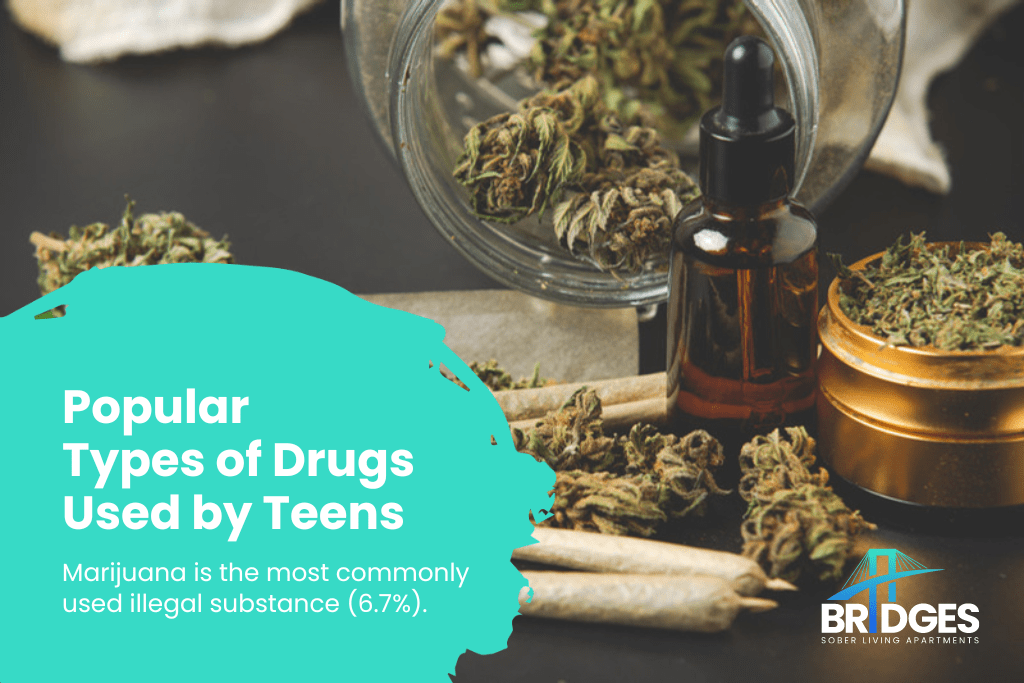
Marijuana is the most commonly used illegal substance (6.7%). In contrast, the non-medical use of psychotherapeutics (pain relievers containing opioids, stimulants, tranquilizers, and sedatives) is the second most commonly used addictive substance (3.3%).
Young people who engage in substance abuse frequently face various problems, including difficulty in their academic lives, issues connected to their health (particularly their mental health), poor relationships with their peers, and involvement with the juvenile criminal system. In addition, there may be harmful consequences for family members and the community.
When it comes to health, substance dependence may cause diseases, severe disability, and even death. The physical effects depend on the type of addictive substances used. For instance, opioids produce negative effects on the respiratory system. Cocaine and other stimulants, on the other hand, increase the risk of cardiovascular illness and stroke. Meanwhile, marijuana use is associated with decreased cognitive abilities.
In addition, substance use increases the risk for brain damage that manifests in different ways, including poor learning ability, forgetfulness and memory issues, impaired reasoning, impaired perception, and changes in socialization. Teens who inject drugs are more likely to contract blood-borne illnesses like AIDS, HIV, and Hepatitis B and C. Drug use can also induce or conceal mental health issues like depression, anxiety, bipolar disorder, and schizophrenia.
Poor attendance at school or work
Loss of interest in hobbies
Withdrawal from loved ones
Deteriorating relationships
Secretive behavior
Locked doors
Increased risk of fights and other violent behaviors
Intermittent bursts of energy followed by extended periods of sleep
Financial loss and distress
Changes in personality or attitude
Appears to be afraid, anxious, or paranoid for no apparent reason
Sudden changes in mood
Irritability or angry outbursts
Inattentiveness
Lack of motivation
Dilated or constricted pupils
Bloodshot or glazed eyes
Skin changes
Abrupt weight changes
Poor sleeping habits
Dental issues
Changes in hygiene
Parents who are worried about their teen’s signs and symptoms should talk to their children and seek professional help.
Keeping a healthy, open relationship with teenagers is one of the most important aspects during this stage of development. When parents cultivate a supportive and nurturing environment, their children can make better choices. Children often absorb their parents’ concerns and messages, even if they may not seem obvious. Parents must engage in conversations with their children about the risks and dangers associated with alcohol and drug use.
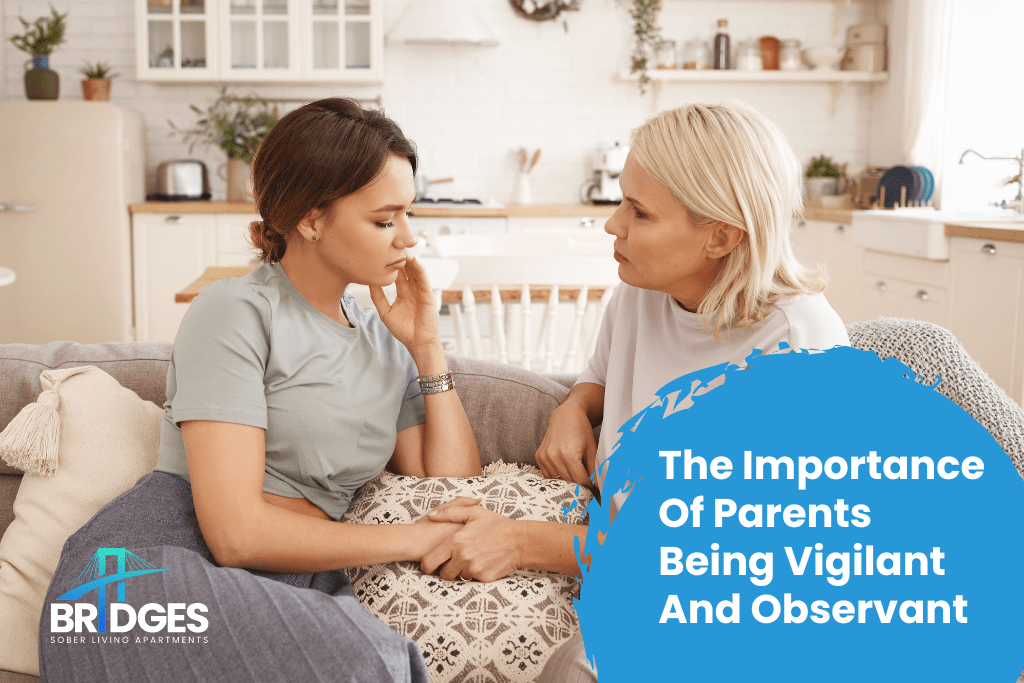
To resist the influence of their peers, teens continually require a strong support network. It is essential to have the support and involvement of parents, guardians, and other caregivers. Parents must maintain vigilance about the company that their children keep and establish ground rules for their time spent with friends, even online. Discipline should be kept reasonable but constant, and good behavior should be acknowledged.
Parents may discuss substance dependence with their children, especially during the formative years of adolescence. Communication with teenagers may evolve as they get older, but it will always revolve around ensuring their well-being and safety.
It can be hard to know when concern becomes something that needs outside help. At Bridges Sober Apartments, we work with families navigating exactly this kind of situation.
Whether you are looking for guidance on how to talk to your teen or trying to figure out what level of support they might need, we can help you think it through, with no pressure and no judgment.
Parents can help prevent adolescents from engaging in the harmful effects of substance abuse by having open, honest, and non-judgmental conversations with them. If parents encourage open and positive communication, children are more likely to follow guidelines and advice regarding substance use.
Parents may share personal experiences and discuss the consequences of drug use. It is also important to make an effort to educate them on drug-related concerns. For instance, parents could say that driving under the influence is against the law, and people may go to jail. It’s important to set clear goals for teenagers. The point is to be very honest about how they should behave around alcohol and drugs.
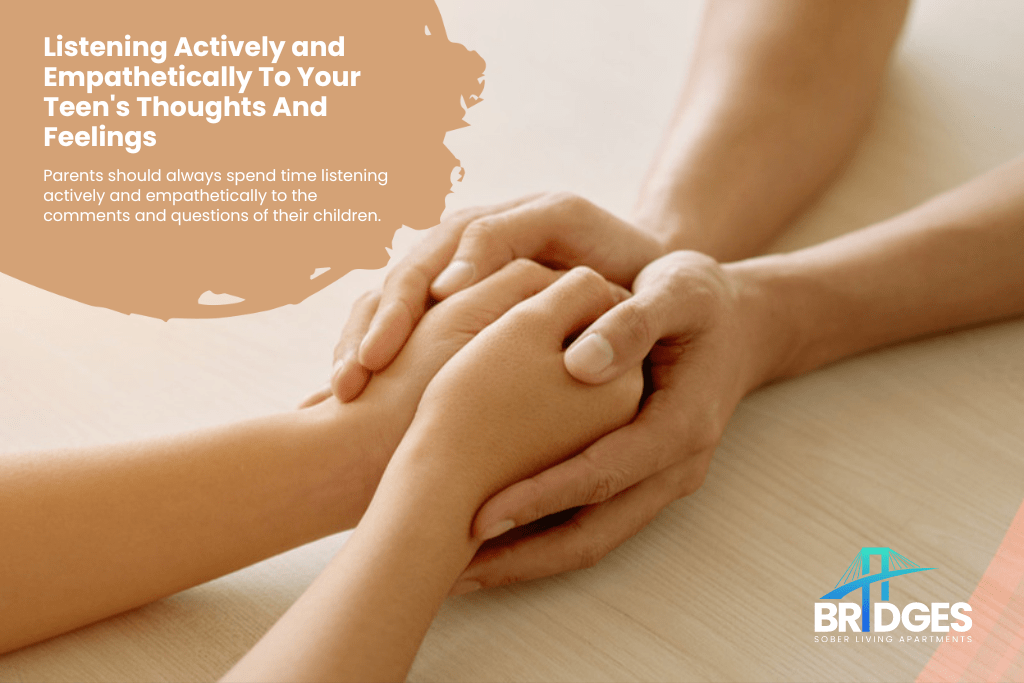
Parents should always spend time listening actively and empathetically to the comments and questions of their children. Individuals need to recognize the importance of their thoughts and feelings, avoiding the tendency to dismiss them as unimportant. Additionally, they should be open to addressing any questions, even if they are broad. If teenagers are misinformed, parents can correct them gently and reassure them that they can verify any facts regarding drugs or alcohol.
Parents must involve their children in activities they enjoy, whether a sport, a club, or a hobby. This can aid teenagers in social interactions and building confidence. Parents should demonstrate interest and respect for their child’s passions and interests. This could encourage teenagers to continue taking part in these healthy activities.
Children are more likely to voice their thoughts and worries when raised in a loving and accepting home environment—where they are encouraged to discuss their feelings, their accomplishments are acknowledged, and their sense of self-worth is enhanced. Parents have a responsibility that extends beyond simply modeling good behavior for their children. That includes spending quality time with teenagers, communicating with them, and creating activities for bonding and making happy memories together.
Building mutual trust is essential for parents to guide their children as they transition into adulthood. Parents and teenagers must find a balance to foster mutual trust and make healthy choices. By cultivating a trusting relationship, parents are likely to have open and honest conversations with their children about difficult topics.

Parents may promote their child’s independence by allowing them the time and space to think for themselves. One of the aspects of adolescence is gaining the ability to manage new experiences, feelings, and interests responsibly. Some concrete examples of how parents can respect the privacy of teenagers include knocking before entering their room and allowing them to have uninterrupted conversations with friends.
It may also be beneficial for parents to converse with their children about privacy, during which they can establish certain ground rules and boundaries. As teenagers get older, parents can adjust these boundaries accordingly.
Teenagers with high self-respect and self-esteem are more likely to make responsible decisions. Parents may assist adolescents in developing these qualities by encouraging them to share their thoughts and feelings and including them in the decision-making process for matters concerning the whole family.
Parents can also define what exactly is a healthy choice. They may assist them in understanding the idea that their state of health is frequently the deciding factor in making responsible decisions.
Parents may talk to their children about the rules and expectations that they have for them and what the consequences will be if they break these limits. They must encourage them to be truthful and make it clear that they may come to them for help at any time, no matter what.
Acknowledge that everyone goes through tough times but that turning to substances like alcohol or drugs is neither a helpful nor a healthy method to deal with problems. Parents should always give the impression that their children can always trust them.
A teenager says, “Marijuana is a plant. It’s legal in some states. Why would they legalize something if it would cause me harm?”
A parent may answer, “Some plants benefit your health, but not all of them. Imagine being exposed to poison ivy. Let’s take a look at alcohol and cigarettes; both are legal, yet they create damage to one’s health. Just because something is legal does not mean it benefits your health.”
A teenager says, “Smoking pot eases my anxiety.”
A parent may answer, “I’ve heard that you find that marijuana helps with your stress and anxiety. I’m sorry you’re experiencing anxiety. I know from personal experience that it’s a challenging emotion. Can we think of any more things that might help you relax?”
A teenager goes home late at night and smells like marijuana.
A parent may say, “When you go home after the curfew and head directly to your room, I can’t help but feel concerned about you. It is important for me that you go by our rules about communication and abstain from doing drugs because I love you and want to ensure your health.”
The first thing parents should do is have a conversation with their children regarding drugs in general. They may mention some recent news and ask them questions about their thoughts regarding drug use. It is vital just to listen and not form any opinions until they finish talking.
Parents may begin by asking, “Tell me, what are your thoughts about marijuana?” as a starting point. Teens who perceive that their opinions are respected are likely to be more open and honest in a conversation. Parents should also make sure that their kids are being heard without judgment.

One of the primary goals of parents is to share as much knowledge and experience with youth in the hopes of preventing them from making the same mistakes. However, appealing to their natural curiosities and inspiring them to look for solutions independently is more helpful.
If a child has been exposed to drugs but refuses to admit there is a problem, parents should focus on the behaviors they’ve observed rather than the drug use itself. Teenagers don’t want to be judged, and things might get heated if parents always approach them with tough love.
Parents must express a desire to see certain behaviors increased (such as time with family, activities, and schoolwork) and others decreased (such as time away from home, drug use, anger, and lying).
When approaching a sensitive topic, parents must consider thinking about how they’d like to be addressed if they were in their teens’ shoes. Talking to children in a calm, respectful manner that takes their perspective to heart will be more productive and impact future talks.
If parents create clear boundaries and consequences, there is a decreased likelihood that a child will experiment with or become dependent on illegal substances. Parents should be specific, open, and compassionate when establishing boundaries and consequences. They must make it clear that they disapprove of them doing drugs and explain what will happen if they continue to do so despite their warnings.

Here are some tips for discussing the potential consequences of drug use:
Prepare For The Conversation
Parents may research the type of substance their teens may be using and its consequences. They may relate their child’s behavior in light of this knowledge, but it’s important not to make any assumptions.
Parents may schedule a time when they won’t be interrupted to have a private conversation. Before striking up a discussion, they must ensure their teens aren’t under the influence of drugs.
Parents may discuss with their teens the following consequences of substance use:
Physical consequences: Diseases (like HIV, AIDS, or Hepatitis C), skin abscesses, physical dependence, withdrawal symptoms, and risk for death
Mental consequences: Anxiety, mood swings, depression, and psychosis
Social consequences: Job loss, dropping out of school, legal problems (driving under the influence and possession charges), jail time, troubled relationships, and hospitalizations
Express Concerns Without Coming off as Judgmental or Argumentative
Parents should not pass judgment or give a lecture to their teens. They must avoid using derogatory terms like “addict” that may cause them to withdraw from communication. Instead, they must let their teens feel appreciated and respected, and they are more likely to listen.
Parents must be patient and understanding as they listen to their teen’s stories and voice their concerns.
Convey The Message That Support is Available
If their teens struggle with substance use, parents must make it clear that they’re open to discussion at any time. They may ask permission to talk to their teens again in a few days to see how they are doing. This act fosters respect for their boundaries.
Parents may communicate that they can get effective assistance to cut back on or quit their substance abuse and assure them that they will help them find appropriate resources when they are ready.
There is a difference between a teenager experimenting once and a pattern that is developing over time. Some signs that the situation may have moved beyond typical teenage behavior:
When substance use has already taken hold in a teenager's life, changing that pattern requires more than good intentions on everyone's part. The social environment a teen is embedded in, the friend group they identify with, and the emotional needs the substance is meeting all play a significant role.
That is a big part of why staying consistent feels harder than it should, even when a teenager genuinely wants things to be different.
Some situations go beyond what a family can manage alone. It may be time to reach out for professional help if:
For teens who have already developed a difficult relationship with substances, effective support tends to involve:
It is also worth thinking about whether treatment close to home or in a new environment is the better option for your teen, as the setting can make a significant difference in outcomes.
Most parents who are dealing with teen substance use are figuring things out as they go, doing their best with limited information and a lot of anxiety. You do not have to wait until things reach a crisis point to get support.
Watching a parent struggle with a teen in trouble can be just as hard. If you are looking for structured support options, women's sober living in Los Angeles offers a community-based environment where adults in recovery can find support.
Every family can be affected by the impact of substance use. But with the right support, things can change.
At Bridges Sober Living Apartments in Los Angeles, we provide a safe, structured, and positive environment where individuals can build a real foundation for long-term sobriety. Whether you are a parent looking for guidance or a young person ready to take the next step, we are here to help.
Most people who reach out to Bridges are not sure exactly what they need yet. That is completely okay. We meet people where they are and help them figure out what comes next, one step at a time.
See what life at Bridges looks like and whether it feels like the right fit.
CDC. 2022, September 29. High-Risk Substance Use Among Youth.
Substance Abuse and Mental Health Services Administration. 2022, April 13. Rise in Prescription Drug Misuse and Abuse Impacting Teens.
Swendsen, J., Burstein, M., Case, B., Conway, K. P., Dierker, L., He, J., & Merikangas, K. R. (2012). Use and abuse of alcohol and illicit drugs in US adolescents: results of the National Comorbidity Survey-Adolescent Supplement. Archives of general psychiatry, 69(4), 390–398. https://doi.org/10.1001/archgenpsychiatry.2011.1503
U.S. Pharmacist. 2010, March 19. Prevalence of Substance Abuse in the Adolescent Population. https://www.uspharmacist.com/article/prevalence-of-substance-abuse-in-the-adolescent-population