Are you or a loved one searching for a trusted sober living program? Give us a call!  310-953-4075
310-953-4075 310-953-4075 Renting after sober living can feel like a major step forward, but it can also raise questions you may not have considered while living in a recovery-focused home.
Will a landlord ask where you have been living?
What will appear on a credit check?
And what if you do not have recent conventional rental history?
This concern also comes up among people preparing to leave sober living:
Reddit User Asks
“I am wondering if rental complexes will give me any flack for living in a sober living off and on for the past year. Do I even need to disclose I was in a sober living house, or could I say I stayed at a private residence.”
These concerns are understandable, but you do not have to wait until you are filling out applications to start preparing. Your time in sober living can also be used to strengthen your finances, employment, paperwork, and plans for independent housing.
The goal is to leave with more than somewhere to move. It is to be prepared to apply for an apartment you can realistically maintain.
Wanting your own place is one part of the decision. Being financially and logistically prepared for it is another.
Before you begin apartment hunting, consider whether you have:
This is also where the length of your stay can become relevant. Staying longer does not have to mean putting independent living on hold. Additional time can be used to save money, strengthen employment, and prepare for your next home.
If you are unsure about the timing, looking at how long to stay in sober living alongside your housing and financial readiness can help you make a more informed decision.
The time before moving out can also be used to work on the responsibilities that come with independent living. Bridges’ sober living program gives residents opportunities to manage everyday routines and responsibilities while preparing for what comes after sober living.
Ideally, preparation starts several months before you expect to leave rather than a few weeks before you need an apartment.
A six-month runway gives you time to work on different areas gradually:
The timeline does not have to look exactly the same for everyone. Its purpose is to prevent the apartment search from becoming something you have to solve immediately before leaving.
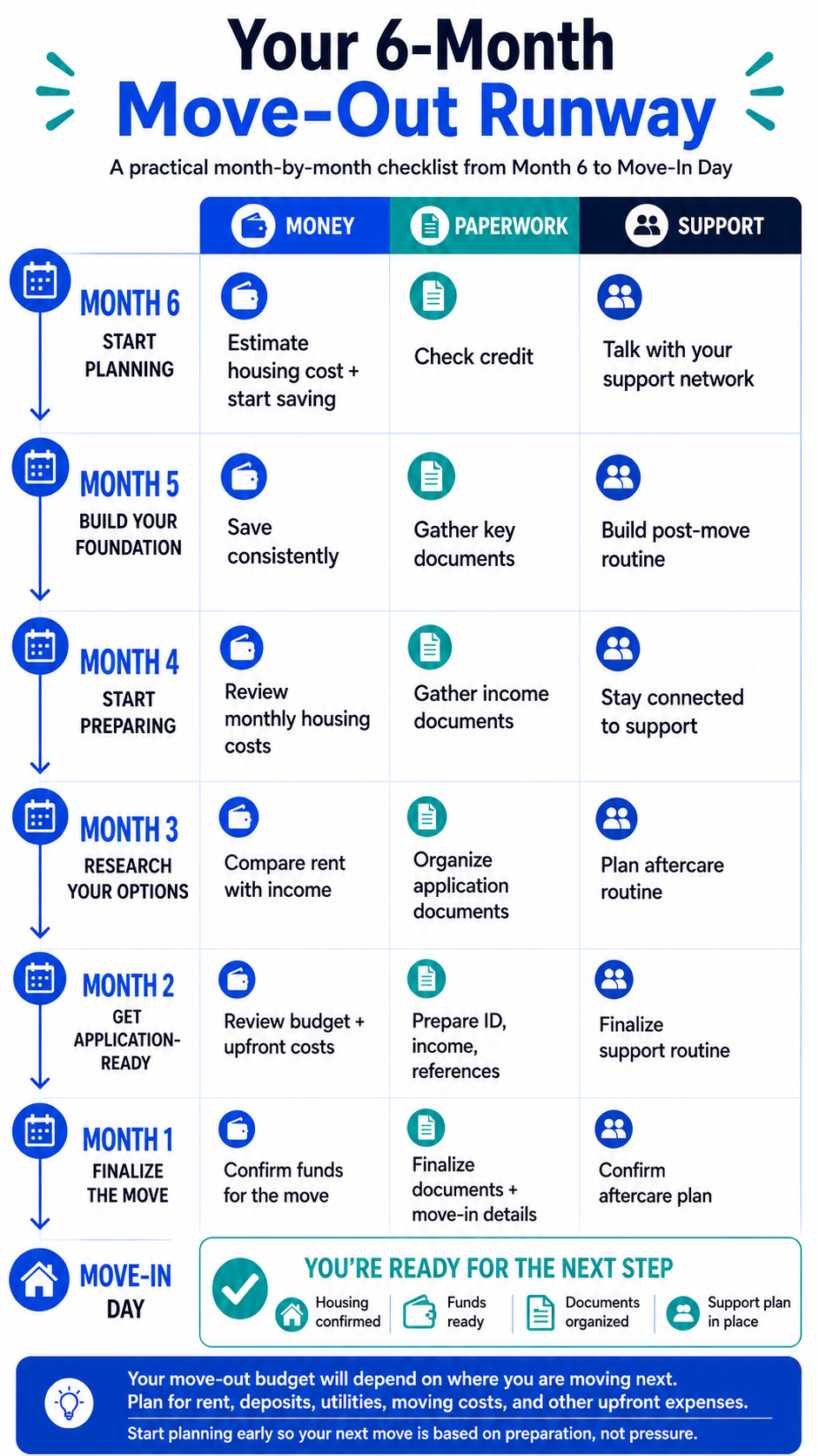
Your apartment budget and your application readiness are closely connected. A monthly rent amount may look manageable until you add utilities, transportation, food, insurance, and the money needed at move-in.
Preparing both your credit and your budget before apartment hunting can give you a more realistic price range.
Start by reviewing your credit reports rather than relying only on a credit score shown in an app. Look for accounts you recognize, balances that need attention, and information that may be inaccurate.
If you are rebuilding credit, focus on manageable habits:
There is no single credit score that guarantees approval for an apartment. Screening standards can differ by landlord and property.
Rent is only one number to consider. Depending on the property and your circumstances, you may also encounter an application screening fee, security deposit, utility setup costs, moving expenses, and purchases needed for the apartment.
Before applying, create two separate numbers:
Monthly housing budget: Rent plus recurring expenses such as utilities, internet, renters insurance if applicable, transportation, groceries, and other regular bills.
Move-in budget: The money you may need before receiving the keys and during your first few weeks in the apartment.
Keeping these amounts separate can prevent you from using all of your available savings to secure an apartment and then having little left for the first month of independent living.
The budgeting habits developed through money management can be useful here because the goal is not simply to qualify for an apartment. You also need to be able to maintain it.
When you apply for an apartment, a landlord may review the information you provide and use a tenant screening report to help evaluate your application. What appears can depend on the landlord and the screening company they use.
Depending on the screening process, a landlord may review:
A credit report may also contain current and former addresses associated with your credit file. Tenant screening reports are not all identical, and the information included can depend on the sources used by the screening company.
Before applying, review your credit information and make sure the details are accurate. Doing this early gives you time to address errors and organize the documents you may need before you begin submitting applications.
Not qualifying for an apartment immediately does not necessarily mean independent housing is out of reach. It may mean you need additional preparation or need to look for a rental with different screening criteria.
Landlords and property managers establish their own financial screening requirements, so there is no single income multiple or credit score that applies to every Los Angeles apartment.
Depending on the property, an applicant who does not meet the standard criteria may be asked for a co-signer or guarantor. In fact, the CFPB notes that requiring a co-signer can be an adverse action when it results from information in a tenant screening report.
Before relying on a co-signer or paid guarantor service, understand the terms and costs involved. It can also be useful to ask the property manager directly:
If employment is the main barrier, additional time to establish reliable income may strengthen a future application. Bridges residents working toward that goal can also use employment support while preparing for independent living.
After learning what a landlord may review, you may wonder whether living in sober living is something you need to disclose separately.
There is an important difference between answering an application accurately and volunteering information that the application does not request.
Rental applications can ask for previous addresses or rental history. If an application asks for information that includes your sober living residence, answer the question accurately rather than creating a different housing history.
That does not necessarily mean you need to explain personal details about why you lived there. If you are unsure how a particular application question applies to your circumstances or are concerned about your legal rights, consider getting advice from a qualified housing attorney or tenant-assistance organization.
The practical goal is to provide the information the application legitimately requires without assuming that you need to give a landlord your entire personal history.
Someone leaving sober living may not have a recent apartment lease in their own name. You might have lived with family before sober living, had a period without conventional housing, or spent significant time in residential settings.
That can leave you wondering what to put down when an application asks about rental history.
Start by identifying what you can document accurately. Depending on your circumstances, that might include:
Do not invent a conventional landlord-tenant history if you did not have one. Instead, ask what documentation the property will accept when an applicant does not have the type of rental history it normally reviews.
This is also where records from sober living may become useful, depending on what the home maintains and is willing or able to provide.
A sober living home may be able to verify certain factual information about your stay, but you should not assume it can provide every document or type of reference a landlord requests.
Before you begin applying, ask the home what it can provide. Useful questions include:
If you live at Bridges, ask the team what documentation is currently available well before you need it. That gives you time to understand what you can use in a rental application and identify another option if a prospective landlord requires something different.
A reference also does not replace the rest of the application. Income, credit, screening criteria, and other requirements may still apply.
Renting your own apartment after sober living does not have to begin when you start browsing listings. The preparation can begin months earlier through budgeting, saving, steady employment, credit awareness, and gathering the paperwork you will eventually need.
That preparation can also give your time at Bridges a clear purpose. Instead of viewing sober living as something standing between you and your own apartment, you can use the time to become better prepared for the responsibilities that come with one.
Bridges can provide an environment where residents continue handling everyday responsibilities while preparing for independence. The goal is not simply to move out. It is to have a realistic plan for staying financially and personally stable once you do.
You should provide truthful information when an application asks about previous residences or rental history. You do not necessarily need to volunteer detailed personal information about your recovery simply because you previously lived in sober living.
There is no universal tenant screening report. Reports may include rental history, credit information, employment verification, eviction records, and other information depending on the screening company.
That depends on the housing arrangement, records available, and what the prospective landlord accepts as rental-history documentation. Keep accurate records of your residence and payments rather than assuming they will automatically appear on a screening report.
Potentially, but policies differ. Ask the residence whether it provides references, what information it can verify, and how a prospective landlord can request that information.
There is no single credit score required for every Los Angeles apartment. Screening standards differ among landlords and property managers, so check the criteria for the property before applying.
Base your target on the apartment you can realistically afford and its move-in requirements. Include rent, the security deposit, utilities, moving expenses, household basics, and a buffer for unexpected costs rather than saving only enough to receive the keys.