Are you or a loved one searching for a trusted sober living program? Give us a call!  310-953-4075
 310-953-4075 A red, bulbous nose can lead people to assume a person's drinking habits. But appearance alone doesn't tell the whole story.
Often called “alcoholic nose” or “drinker’s nose,” rhinophyma is a skin condition that makes the nose thicker, more textured, and sometimes enlarged. It's associated with rosacea, and it can affect people regardless of whether they drink alcohol.
So why has rhinophyma become linked to drinking? And what does the medical evidence actually say?
Understanding the condition helps separate a persistent stereotype from what we know about its causes, symptoms, and treatment.
Rhinophyma is a skin condition in which the nose gradually develops thicker skin, enlarged pores, and an uneven or bulbous shape. It is considered a form of rosacea, although not everyone with rhinophyma has other noticeable rosacea symptoms.
Common features include:
Rhinophyma often develops gradually, particularly around the tip of the nose. In severe cases, the tissue changes can affect nasal airflow.
The condition is more common in men, particularly later in adulthood, but it can affect women too. Its exact cause is not fully understood, and its appearance alone cannot tell you anything reliable about a person's alcohol consumption.
No. Drinking alcohol does not directly cause rhinophyma.
The term "alcoholic nose" comes from the long-standing assumption that a red, swollen, or bulbous nose is evidence of heavy drinking. That assumption is medically unreliable.
However, the scientific relationship between alcohol and rhinophyma deserves a more careful explanation than a simple yes or no.
Rhinophyma is associated with rosacea, a chronic inflammatory skin condition that can cause persistent facial redness, visible blood vessels, and, in some people, tissue thickening.
A 2021 systematic review and meta-analysis examined 14 studies on alcohol consumption and rosacea. It found no overall association between alcohol consumption and rosacea, but its subgroup analysis found an association with phymatous rosacea, which involves tissue thickening. The authors called for further research.
Research also found that alcohol can complicate the picture because it causes blood vessels to widen, which may lead to temporary facial flushing. It can also trigger rosacea flare-ups in some people.
However, these effects are not the same as the gradual tissue changes seen in rhinophyma.
People who never drink can develop rhinophyma, just as someone who drinks alcohol will not necessarily develop it. A person's nose cannot establish whether they have an alcohol use disorder.
The distinction matters: rhinophyma is a medical condition that deserves an accurate diagnosis, not assumptions about someone's habits or character.
Rhinophyma usually develops gradually, so early changes can be subtle. The skin around the nose may start to look different before noticeable thickening or changes in shape appear.
Early signs can include:
These symptoms can also occur with rosacea and other skin conditions, so they don't automatically mean someone has rhinophyma.
A dermatologist can assess persistent changes and determine whether treatment is appropriate.
Research suggests that Rhinophyma is diagnosed more often in men, but women can develop it too. Because the condition is commonly associated with heavy drinking, women who experience nasal thickening or redness may face unfair assumptions about their lifestyle.
The symptoms are broadly similar across sexes, including enlarged pores, persistent redness, thickened skin, and changes in the nose's shape. However, not every case of nasal redness or swelling is rhinophyma.
For women experiencing these changes, the important thing is to seek an accurate diagnosis rather than dismissing symptoms out of embarrassment or fear of being judged.
Rhinophyma is a medical condition, and a dermatologist can assess the skin changes, distinguish rhinophyma from other conditions, and discuss appropriate treatment options.
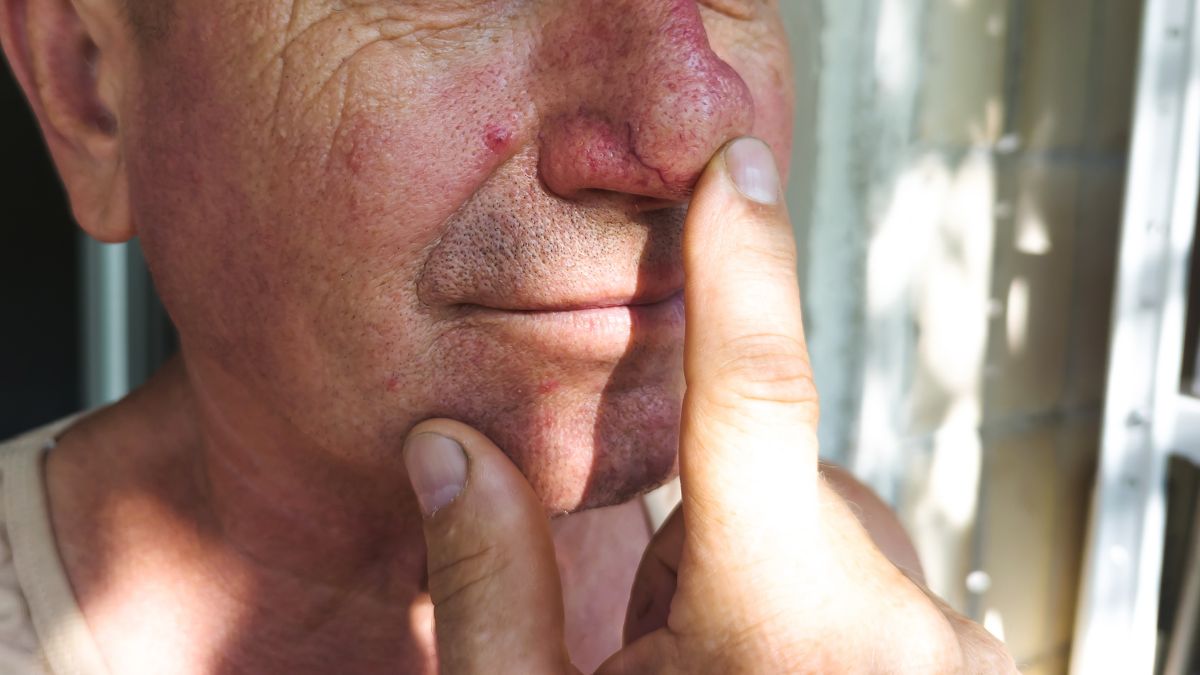
The exact cause of rhinophyma remains unclear. Researchers believe it develops through a combination of factors associated with rosacea, inflammation, and changes in the skin's oil glands and connective tissue.
Factors associated with the condition include:
Alcohol should not be treated as the sole explanation for rhinophyma. Its potential relationship with the condition is more complicated, and current evidence does not establish it as a direct cause.
Treatment depends on how much the skin has changed.
Managing associated rosacea may help control inflammation and prevent further progression in some cases, while established tissue thickening often requires a procedure.
A dermatologist may recommend medication when inflammation or early thickening is present.
Depending on the symptoms, options may include oral doxycycline or isotretinoin. These medications are not suitable for everyone and require medical supervision.
Treatments used for other forms of rosacea may help with redness or inflammatory lesions, but they generally cannot remove substantial excess tissue that has already developed.
When tissue thickening significantly changes the nose's shape, a dermatologist or qualified surgeon may recommend a procedure to remove excess tissue and restore its contour.
Options include:
Each approach has different benefits, risks, and recovery requirements. A specialist can recommend an appropriate method based on the severity of the condition and the desired outcome.
A 2020 review of rhinophyma treatment found several effective procedural approaches, but also noted limitations in the available evidence.
There is no single procedure that is best for every patient.
The term “alcoholic nose” does more than describe a physical appearance. It attaches a judgment about someone's drinking habits to a condition that cannot reliably reveal them.
That assumption can have real consequences. People with rhinophyma may feel embarrassed about their appearance, avoid social situations, or worry about how others perceive them. A 2020 clinical review specifically identifies social stigma and psychological distress as concerns associated with the condition.
The problem is not simply that the term is medically imprecise. It can also discourage people from seeking help because they fear being judged for something they did not cause through drinking.
A more accurate approach is to describe the condition by its medical name, rhinophyma, and avoid concluding someone's habits from their appearance.
If you notice these changes in yourself or someone else, a respectful response is to avoid assumptions and encourage medical advice if the person is concerned. A skin condition should not become a basis for judging someone's character.
Yes. Rhinophyma can develop in people who do not drink. It is associated with rosacea, and its exact cause is not fully understood.
Early treatment may help manage inflammation and limit further thickening. Once substantial excess tissue has developed, medication alone is unlikely to reverse those structural changes.
Stopping alcohol may reduce alcohol-related flushing or help someone manage a personal rosacea trigger. However, no guarantee that stopping drinking will reverse established rhinophyma.
Treatment depends on severity. Medication may help manage inflammation or early changes, while more advanced tissue thickening often requires a procedure. A dermatologist can assess the available options.
No. Not every case requires surgery. Treatment depends on the extent of tissue changes, symptoms, and individual needs. More pronounced thickening is more likely to require a procedural approach.
You may have come across this article because of a comment someone made about your appearance, or because you wanted to understand the connection between alcohol and rhinophyma.
But perhaps you've also started wondering how much alcohol is affecting your own life. You don't need to wait for things to reach a breaking point before asking for help.
At Bridges, we understand that everyone's experience with alcohol is different. Our team can help you explore support options and take the next step toward a healthier, more stable life.
You deserve support based on what you're experiencing, not assumptions others make about you.