Are you or a loved one searching for a trusted sober living program? Give us a call!  310-953-4075
310-953-4075 310-953-4075 Substance use can begin casually, perhaps as a way to socialize, unwind, or cope with stress.
Over time, that pattern may change. Using a substance can become more frequent, harder to control, or begin affecting relationships, work, and everyday responsibilities.
Understanding the stages of addiction can help individuals and families recognize these changes and identify when support may be needed.
Not everyone follows the same path, but certain patterns can offer useful signs to look out for.
The stages of addiction describe how substance use may develop from initial experimentation into a pattern that becomes difficult to control.
This progression is not the same for everyone, and a person can experience serious consequences without passing through every stage.
It also helps to distinguish physical dependence from addiction. Physical dependence occurs when the body adapts to a substance and may experience withdrawal when its use is reduced or stopped.
Addiction involves impaired control over use and continuing despite harmful consequences. The two can overlap, but they are not interchangeable.
The following framework illustrates four common patterns in the progression of substance use.
These stages are not a diagnostic tool or a fixed sequence. They can help explain how a person's relationship with a substance may change over time.
Substance use may begin out of curiosity, social pressure, or a desire to relax. At this point, the person may feel they have control over when and why they use it.
For example, someone might drink at parties or try a recreational drug with friends without expecting it to become part of their routine. Early use does not automatically lead to addiction, but the reasons behind it and the choices that follow can matter.
Use may become more frequent or start serving a specific purpose, such as managing stress, easing uncomfortable feelings, or making social situations easier.
The person may begin planning around substance use or relying on it more often than before.
They might start drinking after work most evenings instead of occasionally on weekends. Even if their responsibilities remain intact, the growing role of the substance can be worth noticing.
At this stage, substance use may begin creating noticeable problems. These could include arguments with loved ones, missed commitments, financial strain, risky decisions, or difficulty cutting back.
A person may recognize some consequences but minimize them or believe they can regain control later.
Concern from friends or family can become more frequent, particularly when the same problems keep returning.
Substance use may become increasingly difficult to control, even when the person wants to stop or sees the harm it is causing.
Cravings, repeated unsuccessful attempts to cut back, and continued use despite serious consequences can be signs of addiction.
Physical dependence may also develop with certain substances, bringing withdrawal symptoms when use is reduced or stopped.
Withdrawal risks vary, and stopping alcohol or some medications abruptly can be dangerous. Medical guidance is important when dependence is suspected.
A person does not have to reach this stage to seek help. Earlier support can be valuable whenever substance use begins affecting health, safety, relationships, or daily life.
The two are often confused, but physical dependence and addiction aren't the same. The body can become accustomed to certain substances, including prescribed medications, without a person developing an addiction.
Addiction involves difficulty controlling use despite harmful consequences. Understanding the difference helps avoid assumptions about someone's relationship with a substance.

The amount someone uses does not tell the whole story. Changes in behavior, priorities, and control can be just as important.
Look for patterns such as:
One sign alone does not establish an addiction, and only a qualified professional can assess a person's situation.
However, repeated changes or growing consequences are reasons to take the situation seriously rather than waiting for things to get worse.
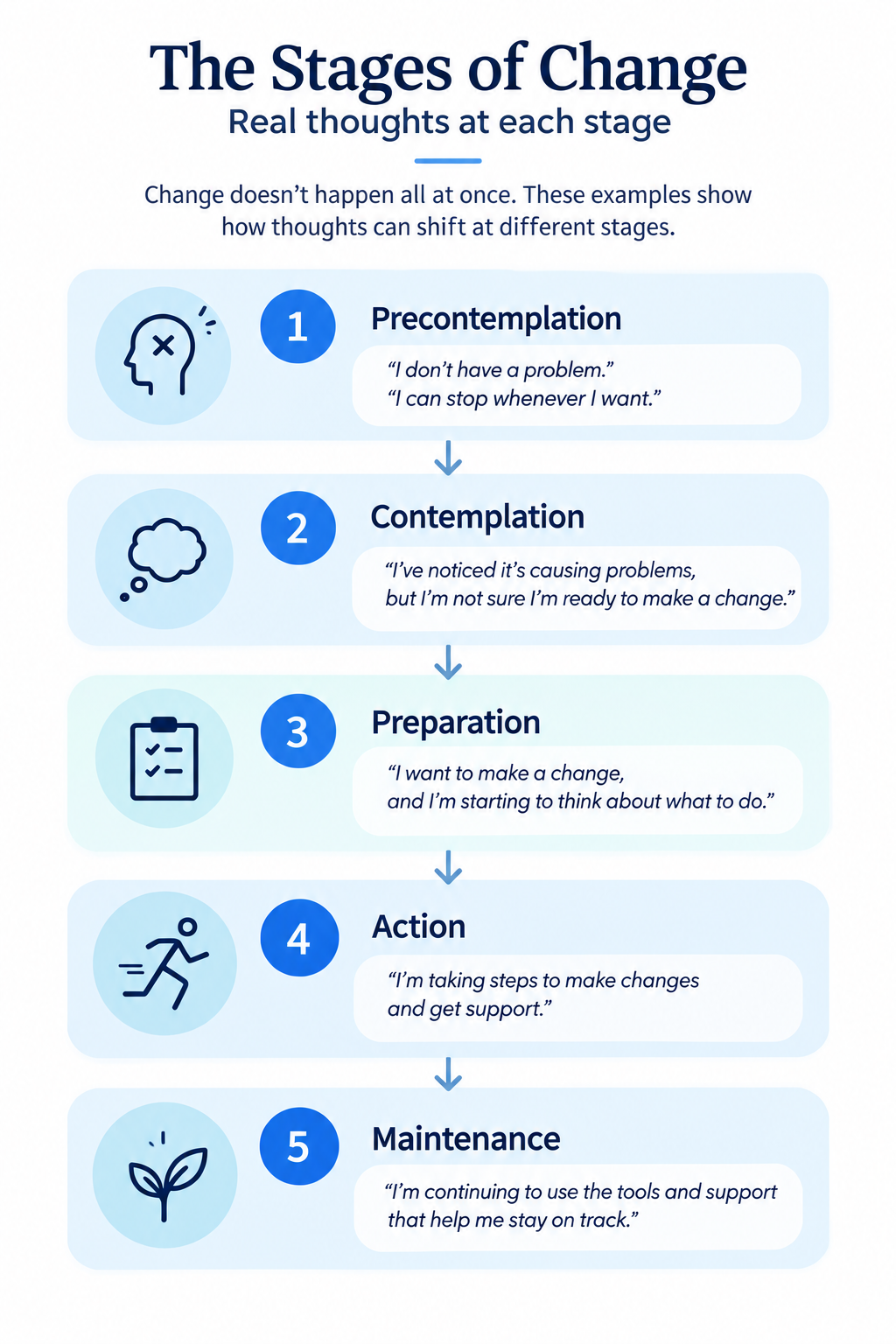
The stages of change describe a person's readiness to make a change.
Someone may understand that their use is causing problems but still feel uncertain about what to do next.
The five-stage model comes from the Transtheoretical Model of Change, developed by James Prochaska and Carlo DiClemente. These stages can help explain why conversations about addiction do not always lead to immediate action.
People may move between stages, revisit earlier feelings, or make progress at different speeds.
The person does not believe they have a problem or does not feel ready to consider changing. They may dismiss concerns from family or friends, or believe their substance use is no different from anyone else's.
They begin to recognize that substance use may be causing problems, but they feel conflicted about changing. Part of them wants things to improve, while another part is reluctant to give up something familiar.
The person starts considering practical next steps. They may research support options, talk with someone they trust, or consider what would need to change in their routine.
They begin taking steps to change their substance use. This might involve seeking professional help, following a recovery plan, or changing routines and environments that make continued use more likely.
The focus shifts to sustaining progress and responding to challenges that arise over time. Ongoing support, healthy routines, and strategies for managing difficult situations may help the person maintain the changes they have made.
You don't have to hit rock bottom to ask for help. If substance use is affecting someone's health, relationships, work, or ability to manage daily life, it's worth taking those changes seriously.
A healthcare provider or addiction specialist can help assess the situation and explain the available options, from counseling and medical care to structured addiction treatment.
Start with what you've noticed rather than labeling their behavior. Share your concerns calmly, listen to their perspective, and offer to help them explore support when they're ready.
Note: Stopping alcohol or certain medications suddenly can cause dangerous withdrawal symptoms. If physical dependence is possible, seek medical advice before stopping. Severe symptoms or an immediate safety risk require urgent medical attention.
Leaving treatment or making changes to substance use is one step. Putting those changes into practice while managing work, relationships, and everyday responsibilities can bring a different set of challenges.
Sober living offers a place to navigate this transition alongside others who are also working toward a substance-free life. Residents can focus on rebuilding independence, managing daily responsibilities, and developing habits that support their goals.
At Bridges Sober Living Apartments in Los Angeles, residents also have access to one-on-one mentoring for individualized guidance.
Yes. The four-stage framework is illustrative rather than a universal sequence. Substance use can become harmful quickly, and not everyone experiences each stage in order.
There is no set timeline. Progression depends on factors such as the substance, pattern of use, individual circumstances, and other health or social factors.
No. Physical dependence means the body has adapted to a substance and may experience withdrawal when its use changes. Addiction involves impaired control and continued use despite harmful consequences. A person may experience one without the other.
Recovery is possible, although the process and support needed vary from person to person. Professional care, ongoing support, and changes to daily routines may all play a role.
Sober living offers a substance-free environment, daily structure, and connection with peers while residents work toward greater independence. It can complement treatment and other recovery support, but it is not a substitute for clinical care.
Recognizing the stages of addiction can help people understand when substance use is becoming difficult to manage. Finding the right environment can be another important step toward making lasting changes.
Bridges Sober Living Apartments offers substance-free housing and one-on-one mentoring in Los Angeles for individuals continuing their recovery journey.