Are you or a loved one searching for a trusted sober living program? Give us a call!  310-953-4075
310-953-4075 310-953-4075 You have a job. You have your own apartment. You pay your bills and manage your responsibilities. So why would you need sober living?
That question is understandable. One person described being surprised when counselors recommended sober living:
“I thought it was CRAZY that my counselors urged me to move into halfway because I thought it was only for homeless people... I cannot be one of those people.”
— r/alcoholicsanonymous, 82 comments
Another person put the concern about accepting help more directly:
“Sleeping in your car for 3 days is you just pretending you are better than asking for help.”
— r/Veterans
Both comments point to a common concern.
A job and apartment can provide an important foundation, but they do not tell you whether your home environment, routines, and support system are helping you maintain that progress.
Having a job and your own apartment are meaningful signs of stability. You have income, somewhere to live, and responsibilities you are already managing, so it is reasonable to ask why you would need sober living.
A job and apartment can be enough for some people, but they do not tell you what your environment will be like once the workday ends.
Consider a few things:
This is one reason a counselor may bring up sober living even when someone has stable housing and employment.
The concern may be less about whether you can work or pay rent and more about whether your day-to-day environment supports the progress you are trying to maintain.
The first few months after treatment can be a period of adjustment. You may have your job waiting, your apartment ready, and a plan for getting back to normal, but you're also navigating life with less day-to-day support than you had during treatment.
This early period matters because the risk of returning to substance use can be higher in the months following treatment. Research has found that relapse can occur relatively soon after discharge, while continuing care and post-treatment support are associated with better outcomes.
That doesn't mean returning home is destined to go badly. It means the transition deserves some thought.
Old surroundings: Returning to the same people, places, or routines connected to past substance use can introduce familiar triggers.
Unstructured time: A full workday may keep you occupied, but evenings and weekends can leave more room for loneliness, stress, or old habits to resurface.
Unexpected setbacks: A difficult conversation, financial problem, stressful day at work, or change in routine can test coping strategies that are still relatively new.
Less accountability: Once you're back in your own home, there may be fewer people noticing when your sleep, routines, or recovery commitments begin to slip.
For some people, that makes a period of structured sober living worth considering. For others, a supportive home, strong routine, and reliable recovery network may provide enough stability to make the transition successfully.
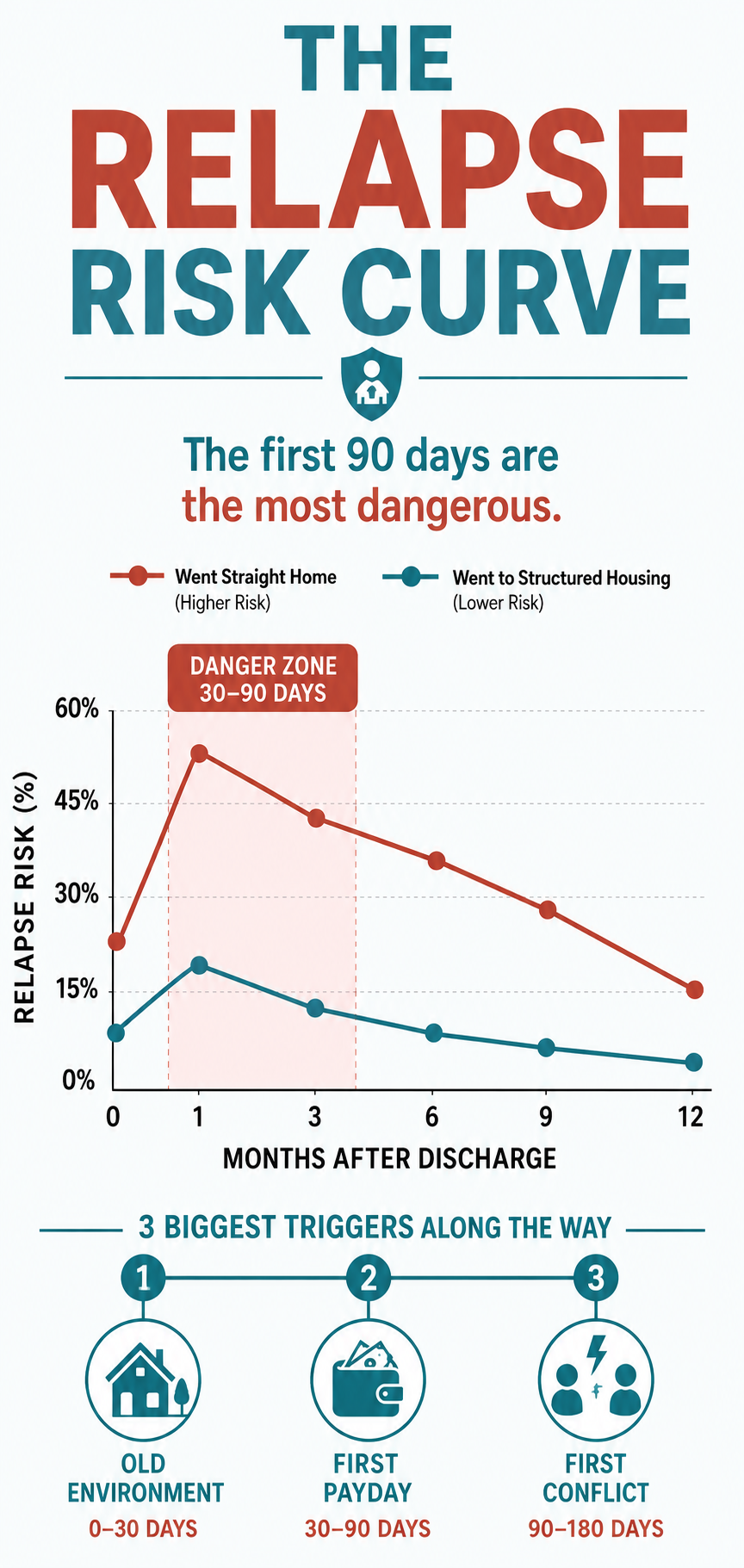
A job and apartment do not automatically make sober living unnecessary. These situations may suggest that having additional support around your daily life could be useful.
Research on recovery housing suggests that the living environment and social support around recovery can matter. A 2025 systematic review of recovery-housing studies found better outcomes in several areas compared with usual care or no intervention, including abstinence, employment, and income, although the researchers noted that the evidence is still developing.
If your apartment, neighborhood, roommates, or social circle are closely connected to previous habits, returning there may create challenges you do not face at work.
A steady job can keep your weekdays busy. It does not necessarily provide support during evenings, weekends, or difficult personal situations. Having access to recovery support services can provide additional guidance as you build routines outside of work.
Your own experience can tell you a lot. If going straight home has not worked well before, it is worth asking what would be different this time.
If sleep, meetings, exercise, work preparation, or other healthy habits tend to fall away when nobody is checking in, additional accountability may help.
You do not need to be struggling every day to benefit from support. If you are concerned about how you will handle stress, conflict, loneliness, or an unexpected setback, that concern is worth taking seriously.
Moving into sober living does not mean every part of your daily life has to change. The biggest difference is that you will be living within shared expectations instead of managing your own apartment entirely on your terms.
| Part of daily life | What you can generally keep | What may change |
| Work | Your job and income | House schedules may need to work around your shifts |
| Transportation | Your car, where permitted | Parking or vehicle rules may apply |
| Phone | Your phone and regular communication | Usually no major change |
| Personal belongings | Your belongings | Storage and room-space rules may apply |
| Privacy | Personal space in your room | Less privacy than living alone |
| Social life | Supportive relationships | Guest and visitor rules may apply |
| Schedule | Work and personal commitments | Curfews or house expectations may apply |
| Daily responsibilities | Work, appointments, and other goals | Shared household responsibilities may be added |
Sober living is not automatically the right choice either. For some people, their existing home and support system may already provide what they need. The role of family and friends in effective recovery is essential.
You have a stable place to live and do not expect your immediate environment to pull you back toward old habits.
The role supportive family and friends play can make returning home easier, especially when the people around you respect your boundaries and understand what you are working toward.
Work, sleep, appointments, recovery meetings, exercise, and other responsibilities are already part of your regular schedule.
You are not trying to handle every difficult moment alone. You know who you can reach out to when you need support.
You have thought through what you will do if work becomes stressful, a relationship becomes difficult, or your routine starts slipping.
None of these signs guarantees that going home will be easy. They simply give you useful questions to consider before making the decision.
The idea of moving into sober living can feel like a demotion when you already have your own place.
But staying in a recovery residence does not necessarily mean stepping away from the life you have built. You can continue working, earning money, driving your car where permitted, using your phone, and handling everyday responsibilities.
For residents who are working or looking for work, employment support can also help with job-related goals while they continue building their daily routines.
For some people, this period can also provide time to save money and prepare for their next apartment after living in sober living apartments and homes.
Continuing to work while living in sober housing can allow you to keep building financial stability instead of putting your employment on hold.
The point is simple: sober living can support independence rather than replace it.
A job and an apartment are meaningful accomplishments. They may also be exactly why you want to protect the progress you have made rather than rush through the next transition.
For women in Los Angeles who want extra support, Bridges offers a women's sober living environment with accountability, community, and healthy daily routines while residents prepare for life on their own.
Sober living may not be necessary for everyone. If your current environment could make the next stage harder, choosing additional support for a period of time can be a reasonable decision.
If you want to hear about the experience from people who have lived at Bridges, you can also read resident testimonials before deciding whether the environment feels right for you.
No, not automatically. A job is an important part of stability, but your home environment, support network, routines, and ability to handle difficult situations are also worth considering.
The main benefit can be the environment around you. Sober living may provide accountability, peer support, shared responsibilities, and a recovery-focused home while you continue working toward greater independence.
It can be, but it depends on what you need. If your current home is supportive and your routines are strong, you may not need another living arrangement. If additional accountability and community would help, sober living may be worth considering.
Yes, in many cases. Employment is commonly compatible with sober living, although each residence has its own policies around schedules, curfews, transportation, and household responsibilities.
There is no single timeline that applies to everyone. Length of stay can depend on the residence, your circumstances, and how prepared you feel for greater independence.
No. Having somewhere to live and having a supportive living environment are not necessarily the same thing. Someone can have an apartment and still decide that a recovery-focused home would provide helpful accountability and community during a transition.