Are you or a loved one searching for a trusted sober living program? Give us a call!  310-953-4075
310-953-4075 310-953-4075 Choosing a sober living home is a decision worth taking your time with. A home may look good online, have a convenient location, or have an open room, but those details do not tell you what daily life will actually be like.
One person asking about sober living put the question simply:
“What makes a good sober house?”
Another discussion raised an even more basic concern:
“Sober houses that are not abusive and awful??”
— r/Minneapolis
Those questions are understandable. You want to know that the home is well maintained, the expectations are clear, the costs are easy to understand, and the people running it take residents' needs seriously.
This 15-point checklist can help you compare sober living homes before you make a decision. Use it when calling a home, reviewing its information, or taking a tour.
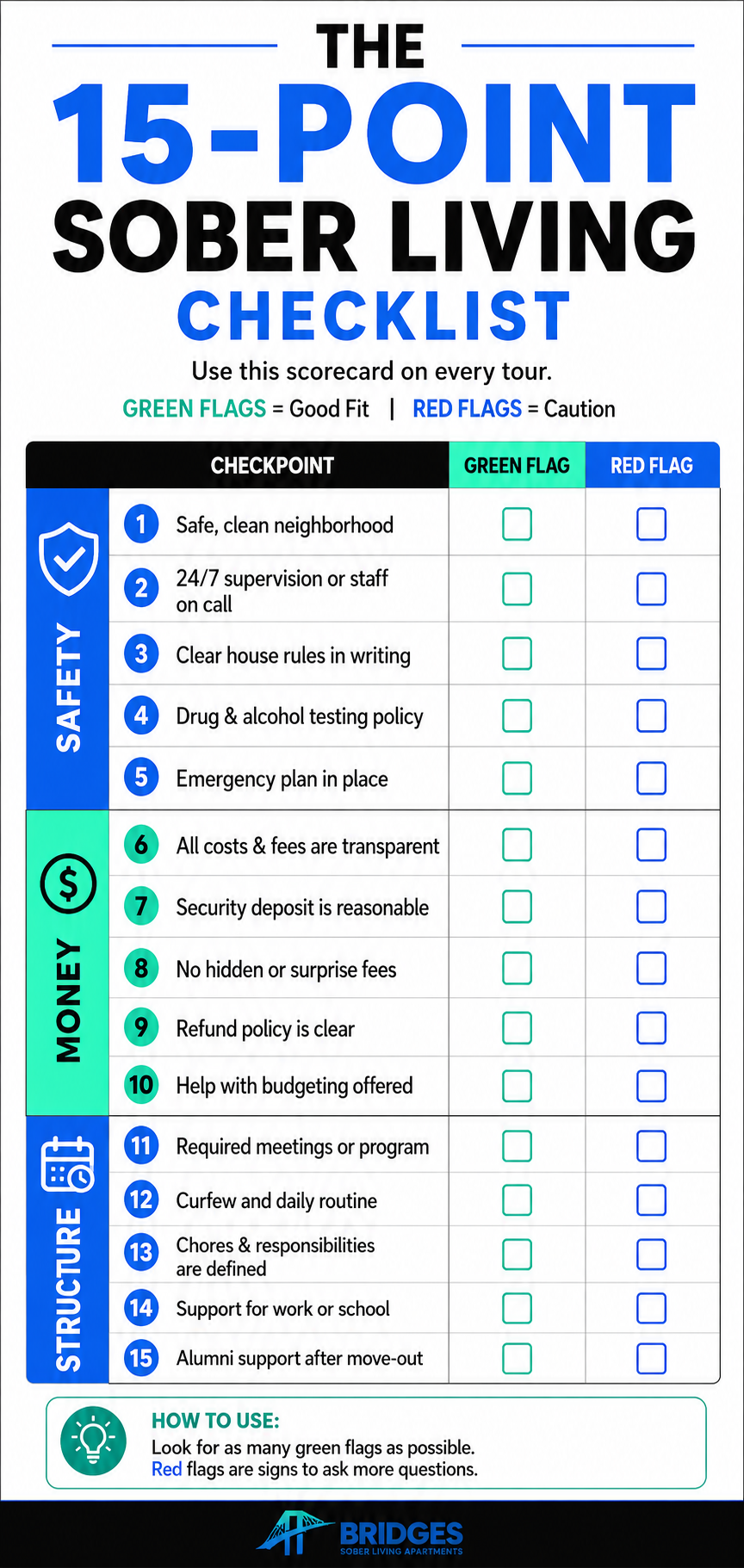
Use these 15 points to compare sober living homes before choosing one. Review the policies, ask questions during the tour, and make sure you understand what daily life will look like before you commit.
Start by finding out who manages the residence and who residents can contact with questions or concerns.
Some homes use paid staff, while others may have senior residents or peer leaders involved in day-to-day operations. The important thing is knowing who has responsibility for the home and how residents receive support.
What to look for: Clear staff roles and contact information.
Ask: Who manages the home, and who is available to residents?
House rules affect everyday life, so you should be able to review them before agreeing to move in.
Look for information about schedules, guests, household responsibilities, meetings, transportation, and other expectations.
What to look for: Rules provided in writing before you sign an agreement.
Ask: Can I take the rules home and review them before deciding?
When choosing the sober living home, the monthly price should be clear.
Ask what is included and whether there are additional costs for things such as utilities, deposits, testing, or household services.
What to look for: A written breakdown of the total cost.
Ask: Is there anything I would pay in addition to the monthly rate?
Plans can change, so find out how deposits and prepaid amounts are handled.
What to look for: A written policy explaining when money may or may not be returned.
Ask: What happens to my payment if I change my plans before moving in?
Every home should explain how it handles a resident who returns to substance use.
Policies differ between residences, so do not assume one home's approach will be the same as another's.
What to look for: A written policy explaining the process and possible next steps.
Ask: What happens if a resident returns to substance use?
If testing is part of the home's policies, ask how often it occurs, what type of testing is used, and how results are handled.
It is also reasonable to ask what happens if a resident believes a result is incorrect.
What to look for: A clear testing process that residents can understand.
Ask: How are test results handled, and is there a way to raise a concern about a result?
If you take prescribed medication, ask about the home's medication policy before moving in.
Policies can differ, including policies concerning medications used for opioid use disorder. NARR's current standards include medication-related considerations for recovery residences.
What to look for: A written policy that explains which medications are permitted and how they are managed.
Ask: How does the home handle prescribed medications?
Medication storage deserves its own question because homes may have different procedures.
Ask who stores medications, who can access them, and what residents need to do when they move in.
What to look for: Clear instructions about storage and access.
Ask: Where are medications kept, and how do residents access them?
Find out exactly how many people share a bedroom and how many people use each bathroom.
This can give you a clearer picture of what everyday living will be like.
What to look for: Specific numbers rather than general descriptions.
Ask: How many residents share each bedroom and bathroom?
Take your time during the tour. Look at the bedrooms, bathrooms, kitchen, common areas, laundry space, and outdoor areas.
The physical environment is an important part of the sober living experience, so look for a home that is clean, maintained, and comfortable for everyday living.
You want to see a home that is clean, maintained, and suitable for everyday living. NARR's standards include expectations related to the physical environment and safe, healthy living conditions.
What to look for: General cleanliness, working fixtures, maintained shared areas, and a comfortable living environment.
Ask: How are maintenance requests handled?
Online photos can help you get an initial idea of a residence, but make sure they show the home where you would actually live.
If possible, compare the photos with the property during your tour.
What to look for: Current photos of the actual residence.
Ask: Are these photos of the home that is currently available?
Certification can be one useful part of your research, but it is important to verify exactly what a certification represents.
Women researching women's sober living can also ask how the home approaches resident support, daily expectations, and the living environment.
NARR sets national standards for recovery residences, while certification is handled by NARR state affiliates rather than NARR itself. NARR's current affiliate directory lists CCAPP as California's state affiliate.
What to look for: Current certification information that you can independently verify.
Ask: Who issued the certification, and can I verify its current status?
Before moving in, ask what happens when a resident needs to leave.
This could involve a planned move, a change in circumstances, or a situation where the home determines that another living arrangement would be more appropriate.
What to look for: A written process that explains notice, belongings, payments, and next steps.
Ask: What should a resident expect when it is time to leave?
A home may not be able to arrange another residence for someone, but it can still explain what resources or options residents may consider.
NARR standards include connecting residents with recovery resources and community support.
What to look for: Familiarity with local recovery resources and other housing options.
Ask: What resources would you suggest if I need a different living arrangement?
Speaking with someone who currently lives in the home can give you another perspective on everyday life.
The conversation should respect the resident's privacy, so a home may not always be able to arrange this. Still, it is a reasonable question to ask.
What to look for: A thoughtful response to your request.
Ask: Is there a current resident who would be comfortable talking with me about their experience?
You don't have to ask every question at once. Start with the things that matter most to your situation, whether that's cost, room arrangements, house rules, medication policies, or the day-to-day experience.
If a home gives you an answer, ask for the policy in writing when possible. If something feels vague or you're not sure what a rule means, ask for clarification before making a decision.
A tour can also tell you things a website can't. Pay attention to the condition of the home, how clearly your questions are answered, and whether the information you receive matches what you were told beforehand.
The goal isn't to find a home with no rules or no compromises. It's to understand what you're agreeing to before you move in.
Choosing a sober living home does not have to be based on photos or availability alone. Take time to compare the details that will affect your everyday life, including costs, house rules, living arrangements, support, and policies.
The right questions can also make conversations with a home much easier. If something is unclear, ask for an explanation or written information before making a decision.
For women in Los Angeles, Bridges provides a women's sober living environment centered on accountability, community, and healthy daily routines. Learn more about the homes, expectations, and admissions process to decide whether Bridges is right for you.
A good sober house should be clear about its costs, rules, living arrangements, policies, and the support available to residents. The home itself should also be clean, maintained, and comfortable.
Start by comparing the things you will experience every day: cost, house rules, room arrangements, support, medication policies, and the home's approach to resident concerns. A tour can help you see how those details translate into daily life.
Ask about the total cost, house rules, staffing, room arrangements, medications, testing, guests, transportation, and what happens when a resident leaves. Important policies should be available for you to review before you agree to move in.
Look at its policies, living environment, certification status, and willingness to answer questions. If a home says it is certified, verify the certification directly with the organization that issued it.
Reviews can provide another perspective, but they should not be your only source of information. Compare reviews with what you learn from the home itself, including its policies, current condition, pricing, and certification information.
Look at the condition of the home, bedroom and bathroom arrangements, shared spaces, and overall environment. Also use the tour to ask about costs, rules, medications, testing, staffing, and what happens when a resident leaves.