Are you or a loved one searching for a trusted sober living program? Give us a call!  310-953-4075
310-953-4075 310-953-4075 At some point in sober living, the question shifts from getting settled to deciding when you are ready to leave. You may be working, managing your responsibilities, and feeling more comfortable with everyday life, but that does not always make the timing obvious.
One person described realizing shortly after leaving that the decision may have come too soon:
“Left sober living house today; now realize I made a huge mistake.”
So, how long should you stay in sober living? Rather than treating 90 days, six months, or another milestone as an automatic move-out date, it helps to consider what you have built during that time and what will support you once you leave.
Your income, savings, housing, transportation, support network, and daily routines can all influence your sober living length of stay. Looking at these areas alongside the time you have spent in sober living can help you make a more informed decision about what comes next.
For people in the early stages of recovery, adjusting to new routines, responsibilities, and everyday challenges can take time. The first few months in sober living can provide an opportunity to work on these areas while accountability and a recovery-focused community remain part of daily life.
During this period, you may be working on:
This is one reason it can be useful to avoid treating 90 days as an automatic move-out point. Three months may be meaningful progress, but reaching that point does not necessarily mean that income, housing, savings, transportation, and ongoing support are all established.
Research specifically examining sober living length of stay gives the six-month point more support than an arbitrary move-out deadline.
A 2023 study of 455 sober living residents in California compared residents who stayed for at least 180 days with those who left earlier.
The study found an association between longer stays and better outcomes, rather than proving that staying six months caused those improvements.
The finding does not mean six months guarantees a particular outcome, nor does it establish an exact timeline that applies to every resident. The researchers concluded that residents and providers should consider stays of at least six months when making longer-term recovery plans.
Six months does not have to become a deadline either.
Some sober living models allow residents to remain as long as they follow house expectations and meet their financial responsibilities. Research describing sober living houses has specifically noted models without predetermined maximum lengths of stay.
A stay longer than a year may make sense if you are continuing to make progress and the environment is still helping you work toward your next step.
For example, additional time could allow you to:
How that additional time is used can be just as important as the length of the stay. At Bridges, the sober living program gives residents opportunities to work on everyday responsibilities and routines while remaining connected to accountability and community.
Staying longer does not automatically mean you are falling behind. At the same time, it can be useful to periodically ask what you are working toward.
If another six months in sober living gives you time to strengthen finances, work, relationships, or routines that will make your next living arrangement more sustainable, that time can have a clear purpose.
Once you have stopped looking at the calendar alone, you can look more closely at your actual circumstances.
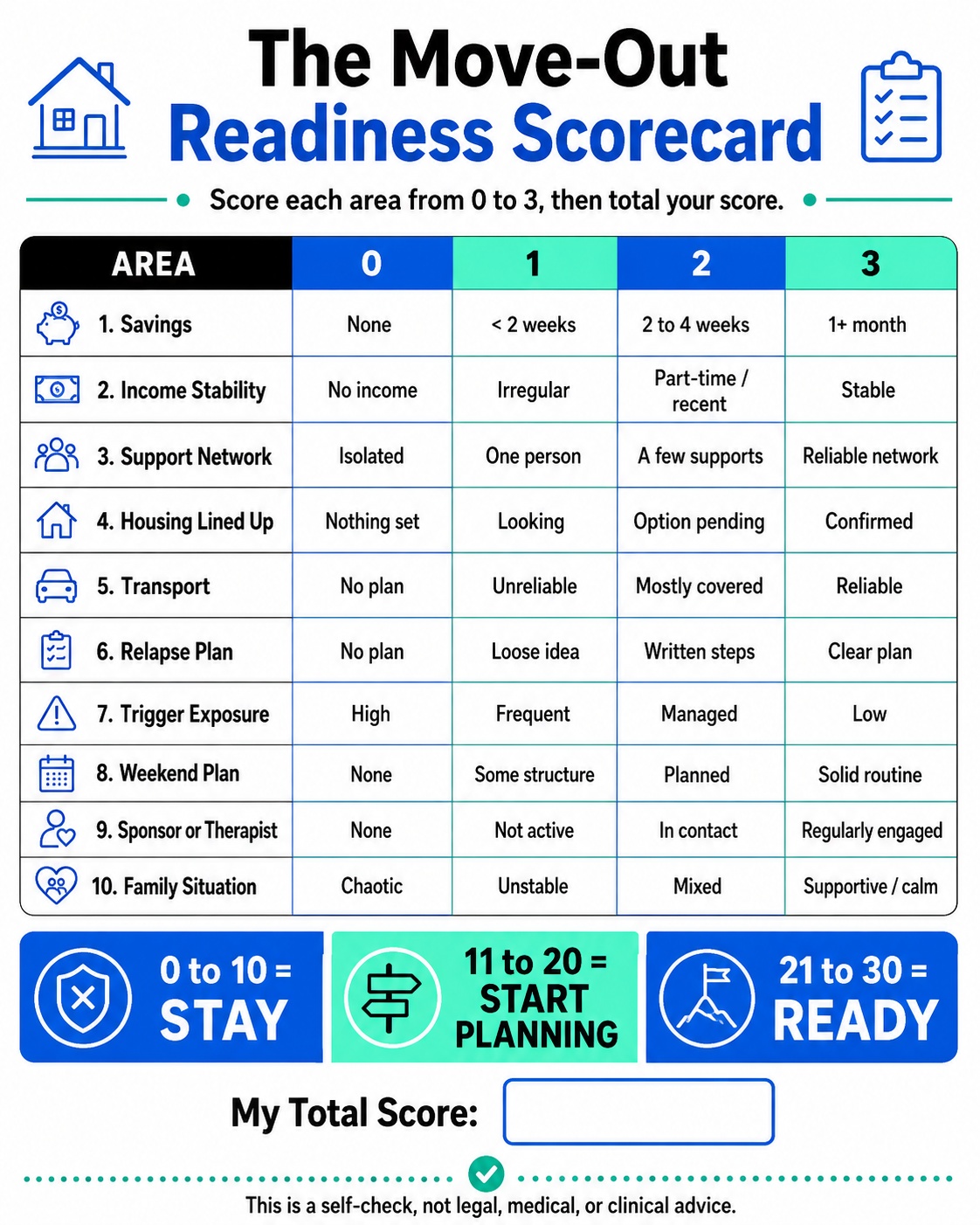
Consider these seven areas before deciding you are ready:
Moving brings expenses. Beyond rent, you may need money for a deposit, utilities, transportation, furnishings, groceries, and unexpected costs.
Good money management before you leave can make those expenses easier to handle.
Having a job is important, but look at how consistent your income has been. Can you reliably cover housing and everyday expenses month after month?
If employment is still new or uncertain, additional time may allow you to build a stronger foundation.
Know who will remain part of your recovery after you move. That might include a sponsor, therapist, mentor, recovery community, supportive family members, or other trusted people.
Work can provide routine Monday through Friday. Evenings and weekends can be different.
Think about what you will actually do with the time that is currently shaped by house routines, meetings, other residents, or shared responsibilities.
Wanting your own apartment and qualifying for one are different things.
Consider rent, income requirements, credit, deposits, lease terms, roommates, neighborhood, and whether the environment itself supports the life you are trying to maintain.
Make sure you can consistently get to work, appointments, meetings, groceries, and other regular commitments without depending on arrangements that may disappear after you move.
Think through what you will do if you feel overwhelmed, encounter old triggers, lose a job, experience relationship problems, or return to substance use.
Writing down who you will call and what you will do next makes the plan more concrete.
Not every desire to leave comes from feeling fully prepared for what comes next.
Sometimes the urge appears after something difficult happens:
Those feelings can be real without necessarily meaning that leaving immediately is the best response.
Before making the decision, go back to the readiness questions. Is your housing arranged? Is your income stable? Do you have savings? What will your support system look like? What happens on difficult evenings?
A frustrating week and being ready for your next living arrangement are two different questions.
A good transition begins while you are still living in sober housing.
Instead of choosing a move-out date first and figuring everything else out afterward, work backward from what you will need once you leave.
Before moving, try to have:
This preparation can happen gradually. Someone may use employment support to strengthen their work situation while also improving budgeting skills, saving money, and researching future housing.
Bridges can support this broader process by giving residents a sober living environment where everyday responsibilities remain part of recovery. Rather than treating move-out as the only measure of progress, residents can work on the routines and skills they will continue using afterward.
Leaving sober living changes more than your address. Some of the accountability and routines that were built into your home may now need to be maintained intentionally.
There is not enough evidence to identify a universal “60-day relapse spike” after leaving sober living.
A 2025 study of residents who left 48 sober living houses in Los Angeles found that the circumstances surrounding departure were associated with later abstinence and housing outcomes.
Rather than treating 60 days as a fixed risk period, it is more useful to use the first two months to focus on housing, routines, finances, and ongoing support.
The goal is not to recreate sober living somewhere else. It is to carry forward the routines, relationships, and responsibilities that helped you prepare for life after it.
There is no single answer to how long sober living should last. Research provides a meaningful reason to consider six months or longer, but the calendar should not be the only thing guiding your decision.
Look at what you have built during your stay. Stable work, savings, housing, transportation, supportive relationships, and dependable routines can tell you much more about your preparation than reaching a particular date.
At Bridges, sober living can be a period for building those parts of everyday life while remaining connected to accountability and community.
The goal is not to leave as quickly as possible. It is to make the time you spend there useful for wherever you plan to live next.
There is no universal timeline. Research involving California sober living residents found better outcomes among those who stayed six months or longer compared with those who left earlier, but individual needs and circumstances still matter.
It may be enough for some people, but 90 days should not automatically be treated as a move-out deadline. Consider whether your income, housing, savings, support, transportation, and routines are ready for the transition.
There is no single average that applies to everyone. Length of stay depends on the residence, individual needs, progress, and plans for what comes next.
A longer stay can provide more time to build consistent routines, strengthen supportive relationships, manage everyday responsibilities, and prepare for the transition to more independent living.
Potentially, yes. Length-of-stay policies differ by residence, and some sober living models allow residents to remain as long as they follow house expectations and meet their responsibilities.
Look beyond the amount of time you have stayed. Stable income, savings, suitable housing, transportation, ongoing support, dependable routines, and a plan for difficult situations are useful factors to consider.