Are you or a loved one searching for a trusted sober living program? Give us a call!  310-953-4075
310-953-4075 310-953-4075 If you already have the option of renting an apartment with a sober roommate, sober living can seem like more structure than you need. You have a place to live, someone who understands your goals, and a household where you have agreed to stay sober.
But there is an important difference between living with someone who is sober and living in a home designed around recovery.
That difference becomes especially important when things get difficult. If your roommate relapses, stops following your agreement, or decides they no longer want the same kind of household, the arrangement may not have much built-in protection. A sober living home has policies and accountability systems designed to address those situations.
One person looking for sober housing asked:
“[Advice] sober living/sober roommates?”
The question gets at the real decision: Do you simply need a sober person to share a home with, or would your recovery benefit from having structure and accountability built into the home itself?
The main difference is not simply the room itself. It is what comes with the living arrangement.
Sober living can add written house expectations, accountability, recovery-focused routines, drug testing, and a community of people who are also actively working on their recovery. Depending on the residence, there may also be staff or house managers who help address questions or concerns.
With a sober roommate, most of those expectations have to be agreed upon between the two of you.
For example, you might agree that neither person brings alcohol or drugs into the apartment. But if that agreement changes, there may be no written policy or third party to help manage the situation.
Sober living can also provide a sober living community, where residents share a recovery-focused environment rather than simply sharing a lease. Support groups can also be part of someone's ongoing recovery routine, depending on their needs and the resources available to them.
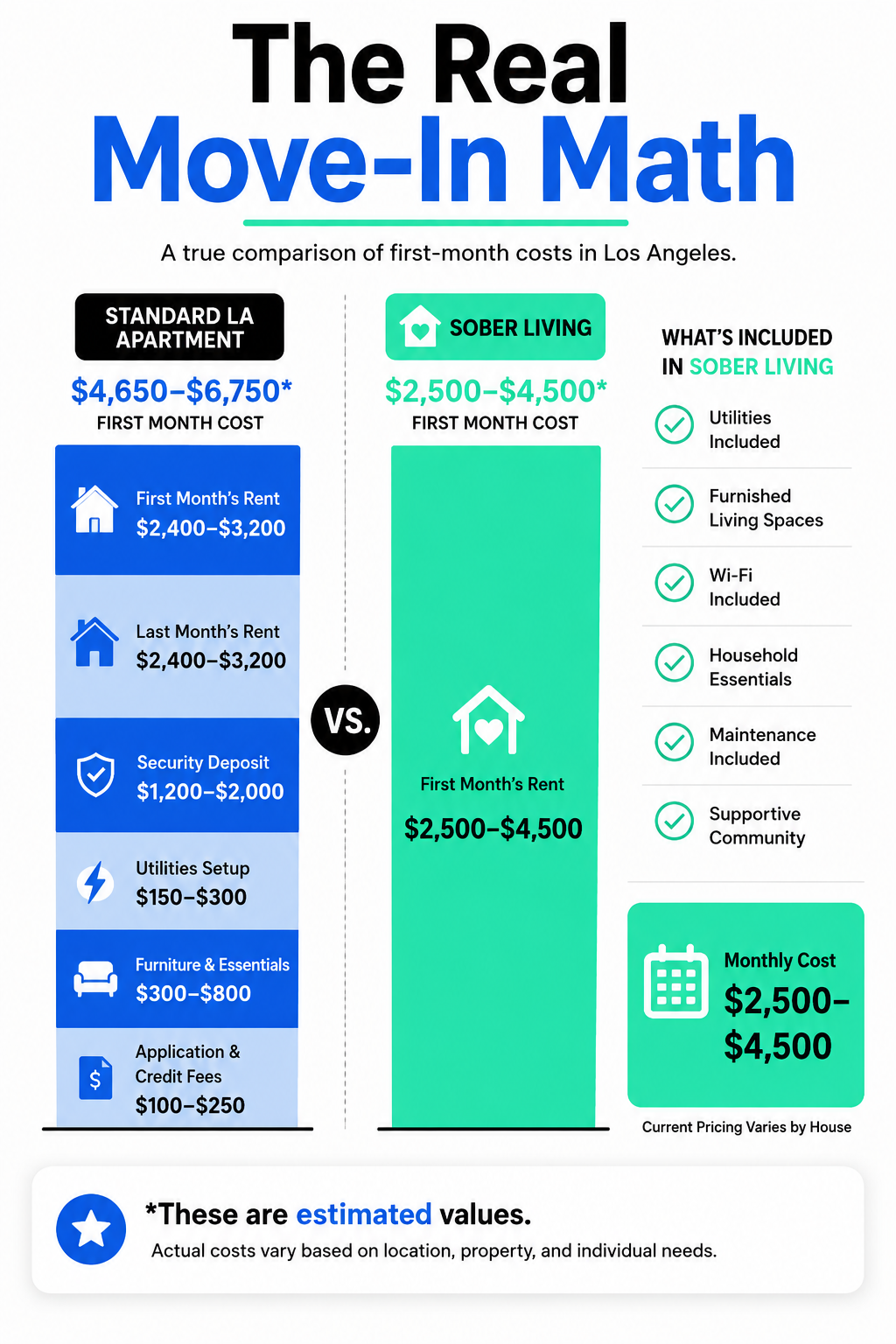
Monthly rent is only part of the cost of moving into an apartment.
Depending on the rental, you may need to account for a security deposit, first month's rent, application or screening fees, furniture, utilities, and household supplies. The exact amount varies by sober living apartment and lease terms.
Sober living can work differently. Some homes bundle costs such as furnishings and utilities into the monthly payment, while others may have separate fees.
Finding someone who is sober is only one part of finding a suitable roommate.
You also need to agree on the kind of household you want. Talk about guests, social activities, overnight visitors, shared expenses, cleaning, quiet hours, and what happens if one person's needs change.
Being upfront can feel uncomfortable, especially when you are searching through ordinary rental listings. You may not want to explain your recovery history to a stranger just to find out whether they are comfortable sharing a sober household.
That is why it helps to discuss expectations early.
A good match is not simply someone who says they are sober. It is someone whose daily habits, boundaries, and expectations for the home are compatible with yours.
Once you find a roommate, you still have to create the household.
That can include:
1. Finding an apartment both people can afford
2. Passing the landlord's application and screening process
3. Paying the required upfront costs
4. Buying or bringing furniture
5. Setting up utilities and internet
6. Dividing household expenses
7. Agreeing on shared responsibilities
8. Establishing expectations around visitors and the home environment
You also need to decide what happens when one person wants to move out or can no longer afford their share.
It also helps to have a clear plan for rent, utilities, groceries, and other shared expenses. Building stronger money management skills can make it easier to budget for these responsibilities and prepare for unexpected costs.
With an apartment, these arrangements are largely between the roommates and the landlord. A sober apartment arrangement may give you more control over your living space, but it also means more of the planning falls on you.
A sober roommate can be an important source of support, but they are still your roommate. They may not have a formal role in helping you manage a difficult situation.
Consider what would happen if:
In a sober living home, there are usually written policies that explain how the residence handles these situations. There may also be someone responsible for addressing concerns.
With a private apartment, you and your roommate generally have to work through those situations yourselves.
That does not make one option automatically better. It simply means the two arrangements provide different levels of built-in support and accountability.
An apartment with a sober roommate may be a reasonable choice when you already have a strong foundation outside the home.
Some signs that this arrangement may work well include:
Length of sobriety alone does not determine whether someone is ready for a particular living arrangement. Your support network, routines, housing stability, and ability to handle difficult situations are also important.
You do not have to choose between managing an apartment with a sober roommate and living somewhere that feels overly restrictive. Bridges provides a women's sober living environment centered on accountability, community, and healthy daily routines.
With Bridges, you can have:
You get the independence of a more residential living arrangement without giving up the accountability and community that make sober living valuable.
For someone deciding between a sober roommate and sober living, that balance can make Bridges the stronger choice.
An apartment with a sober roommate can work well for someone who already has stable routines and a strong support network. Sober living can offer additional accountability and a recovery-focused community.
Take time to compare what each option provides, what it costs, and what responsibilities come with it. If you are considering apartment-style sober living in Los Angeles, explore the Bridges available living options and compare what each home offers.
A sober roommate shares a commitment to maintaining a sober household. Sober living typically adds house rules, accountability, shared expectations, and other recovery-focused support.
Not necessarily. Compare the full first-month cost, including deposits, utilities, furniture, application fees, and other setup expenses. Some sober living homes include several of these costs in the monthly payment.
Yes. You can choose to share a regular apartment with someone who is also committed to maintaining a sober household. The arrangement will depend on your lease and the expectations you establish together.
Discuss sobriety expectations, guests, visitors, expenses, cleaning, schedules, social activities, and what you will do if either person's needs change.
Sober housing is a broad term for housing designed to support people who want to maintain a sober living environment. Different homes can have different rules, services, and levels of accountability.
Not always. A sober living community may have shared rules, resident expectations, and recovery-focused support that you would not typically have in an ordinary apartment.