Are you or a loved one searching for a trusted sober living program? Give us a call!  310-953-4075
310-953-4075 310-953-4075 A sober living apartment is a drug- and alcohol-free place to live for people in recovery who want structure, support, and a stable environment while returning to everyday life. It is not the same as residential treatment or detox. Residents live in the community, follow house expectations, participate in recovery, and can work or attend school.
If you are searching what is sober living, the basic idea is simple: it is a place to live while continuing to build a life in recovery.
At Bridges Sober Living Apartments, the focus is on providing a safe, supportive living environment where residents can develop life skills, pursue employment, participate in recovery, and gradually transition back into everyday life. Bridges opened in Los Angeles in 2022 and offers sober living apartments designed around community, accountability, and continued recovery.
Not sure if sober living is right for you?
Sober living is recovery-focused housing, not a treatment center.
Residents live in a drug- and alcohol-free environment while continuing to manage the responsibilities that come with everyday life. Depending on the residence, that can include work, school, recovery meetings, household responsibilities, and building practical life skills.
| Housing | A stable, substance-free place to live |
| Community | Other residents working toward recovery |
| Structure | House rules, routines, and accountability |
| Recovery | Meetings, support, and recovery activities |
| Independence | Space to work, study, and build everyday skills |
Bridges describes its sober living environment as a supportive community where residents can work toward sobriety while developing skills for employment, financial management, relationships, and independent living.
Sober living is different from a detox program or residential clinical treatment. Bridges describes its apartments as non-clinical sober living support, meaning the primary purpose is providing a recovery-focused place to live rather than providing medical detox or residential treatment.
That distinction matters when deciding what level of support is appropriate.
Looking for a structured place to live in recovery?
So, what is a sober living house?
Traditionally, sober living has often meant a shared residential home where several people in recovery live together and follow house rules. A sober living apartment follows the same basic recovery principles but provides an apartment-style living environment.
That difference can matter to someone who wants structure and community without the feel of a traditional group house.
Apartment-style living at Bridges Sober Living Apartments
Bridges' current website describes its residences as sober living apartments and highlights furnished rooms, shared spaces, recovery support, and a structured environment.
The important point is that apartment-style does not mean unstructured. Residents are still expected to maintain sobriety, follow house rules, participate in recovery, and contribute to the community.
Sober living is meant to bring recovery into everyday life. Your day is not filled with treatment sessions, but recovery, work, responsibilities, and healthy routines remain important parts of the experience.
A typical day may include:
The exact routine can vary. The goal is not to create a rigid schedule for every resident, but to provide enough structure to support consistency and continued recovery.
Cost is an important part of choosing a sober living home, but the monthly rate is only one thing to consider.
Depending on the residence, costs may vary based on room type and what is included. Before moving in, make sure you understand the current rate, payment expectations, and what your housing cost covers.
| Cost | What is the current monthly rate? |
| Room | Is the room private or shared? |
| Amenities | What is included with the housing? |
| Rules | Are there additional requirements or fees? |
| Payment | When and how is payment handled? |
Sober living can be a good next step for someone who wants a stable, substance-free environment while continuing to build an independent life.It may be a fit if you are:
At Bridges, residents can receive support with areas such as employment, money management, family relationships, mentoring, and recovery participation.
Sober living is not detox or residential clinical treatment.
Someone who needs medical supervision, detoxification, emergency care, or intensive clinical treatment may need a higher level of support before moving into recovery housing.
That does not mean sober living is not an option later. It simply means the right level of care should come first.
Not sure what level of support makes sense?
There is no universal timeline for sober living.
Some residents may stay for several months while returning to work or school. Others may need longer to establish stable routines, strengthen their recovery network, rebuild relationships, or prepare for independent housing.
The important question is not simply:
"How quickly can I leave?"
It is:
"What do I need to build before I am ready to leave?"
A 90-day period is often discussed in recovery housing because meaningful changes in routine and stability take time. If Bridges has a current 90-day minimum or recommendation, that policy should be explained as a starting point rather than a finish line.
The right length of stay can depend on a person's recovery, responsibilities, housing situation, and progress toward greater independence.
The goal is to leave with more than a completed number of days.
You want to leave with stronger routines, practical skills, supportive relationships, and a plan for what comes next.
Not every recovery residence provides the same amount of structure or support.
The National Alliance for Recovery Residences (NARR) describes four levels of recovery residence, with differences in supervision, structure, services, and the role of clinical support.
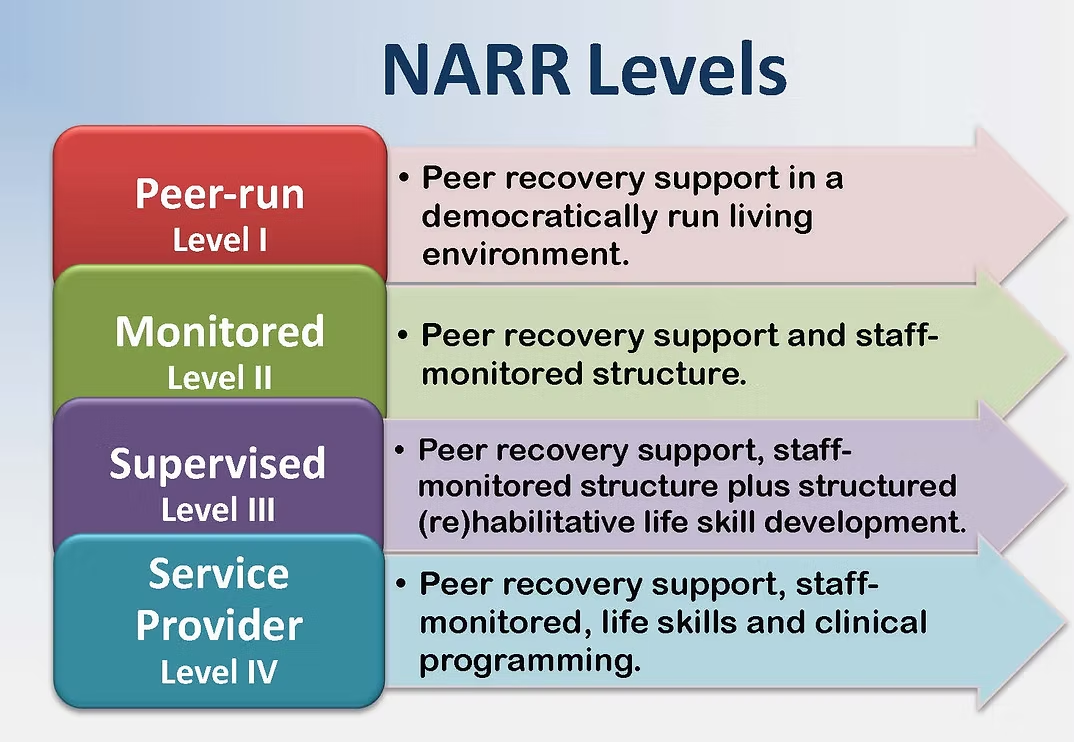
The right setting depends on where someone is in recovery and how much structure or support they need.
A person stepping down from treatment may need a different environment than someone who is already working and looking for a stable recovery community.
No. Rehab provides treatment, while sober living provides a place to live while continuing recovery. Bridges describes its apartments as non-clinical sober living rather than detox or residential treatment.
A halfway house is a type of transitional housing designed to help people move toward greater independence. The term can refer to different types of programs, while sober living specifically focuses on recovery and a substance-free living environment.
Sober living is designed around a drug- and alcohol-free environment. Residents are expected to follow sobriety requirements and the rules of the residence.
Yes. Working is an important part of building an independent routine. Bridges also provides employment-related support, including job training and resume assistance.
Sober living is not designed to keep residents inside all day. Residents can work, attend school, go to meetings, and handle everyday responsibilities while following the residence's rules and applicable curfews.
Sober living is generally housing rather than clinical treatment, so payment works differently from insurance-covered treatment services. Ask admissions about current costs and payment options.
Knowing what is sober living can help you decide what kind of environment you need next.
If you are looking for a recovery-focused apartment where you can continue working, participate in recovery, build life skills, and live alongside others working toward sobriety, Bridges may be worth exploring.
Bridges has three Los Angeles-area residences:
Each residence offers a different living environment, so availability and the right fit can depend on your situation and current openings.